And then, and then: why a plot feels like a list
If two chapters can change places without anything breaking, the middle of your novel is a sequence rather than a plot.
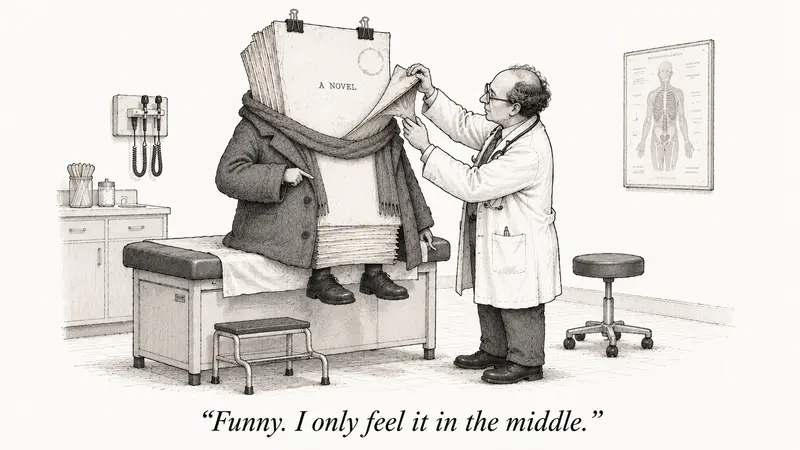
You have cut eight thousand words from the middle. You have tightened the dialogue, shortened the paragraphs, moved the flashback. The chapters are, individually, better than they have ever been. And the reader who has just finished it says, kindly, that it lost her somewhere around the halfway mark.
The fault is almost certainly not in any of your chapters. It is in the joins between them, which is the one part of a manuscript nobody revises, because it is not written down anywhere.
And then, therefore, but
The most useful structural test in fiction takes one word per chapter.
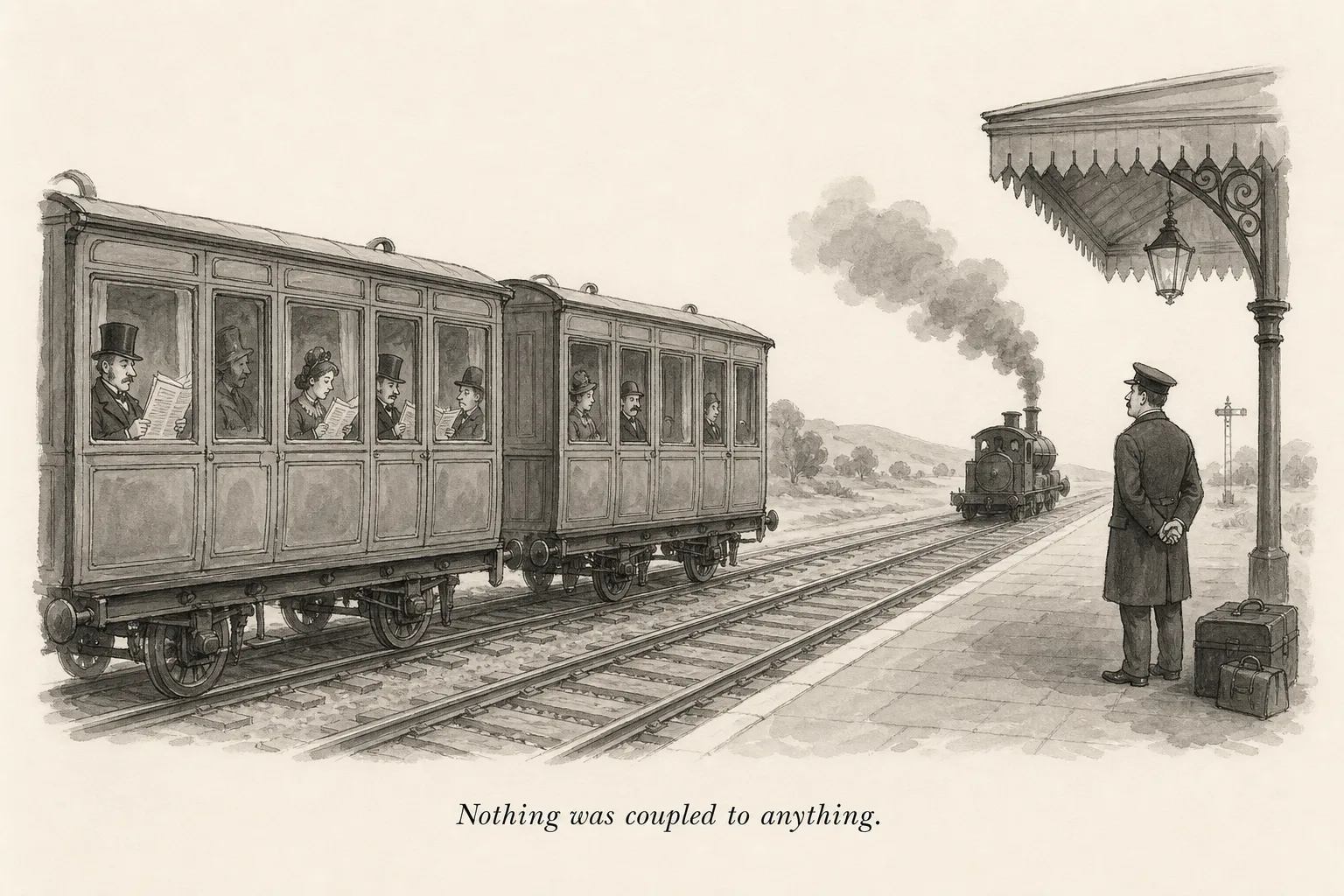
Between any two consecutive scenes there is an implied conjunction. Either the second happens because of the first — therefore — or it happens in spite of it — but — or it simply happens next: and then. Scenes joined by and then sit side by side. Scenes joined by therefore or but cause each other, and causation is what makes an ending feel inevitable rather than merely final.
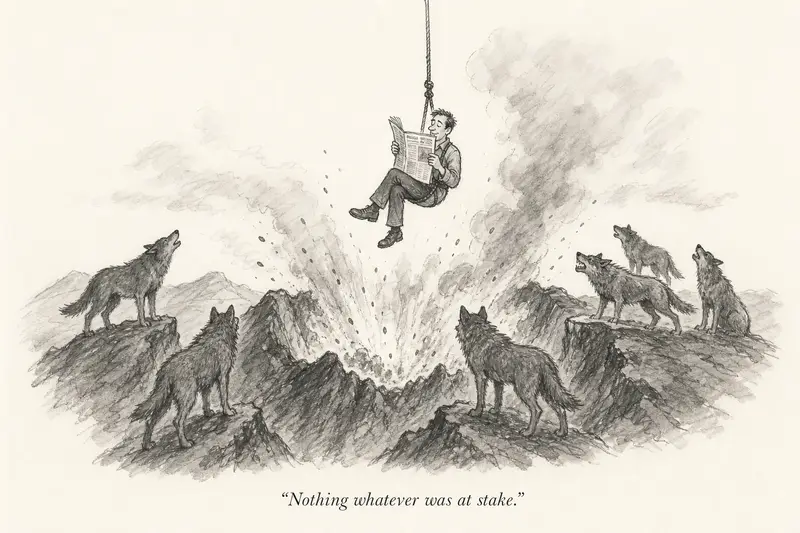
This is not a demand that everything be tightly plotted. A single and then is a breath. Two is a lull. Five in a row is the thing your reader described as losing interest, and no amount of line editing inside those five scenes will fix it, because each of them is fine. What is missing is the debt each one owes to the last.
There is a counterfeit worth knowing about. A join can wear the grammar of consequence — and so, which meant that, as a result — while the actual mechanism connecting the two scenes is a coincidence, an overheard conversation or a convenient arrival. That is still and then. Causation in fiction means a character's decision produced the next situation. Luck does not count, however smoothly it is phrased.
Notes on the craft
Occasional letters on what actually breaks novels — and how to fix them. Written for people revising a draft.
No fixed schedule. Unsubscribe in one click. Privacy Policy
Why you cannot see it from inside your own draft
Three reasons, and they stack.
The first is that you know why chapter twenty-four follows chapter twenty-three. The motive is in your head, in your notes, in the outline you abandoned in month four. You supply the missing link every time you read, without noticing you are doing it — the same blind spot that makes a scene that changes nothing feel purposeful to the person who wrote it.
The second is that chronology is a very convincing counterfeit of causality. You wrote the events in the order they happened to the characters, which feels like an order, and is — just not a narrative one. Time is not consequence.
The third is simply where the fault lives. You revise scene by scene, and a weak join is not inside a scene. It is in the white space between two of them, which is exactly where the eye stops looking.
How to test it by hand
One sheet of paper. This is the cheapest structural audit there is.
List your chapters or scenes down the left in order, with nothing but a two-word label each. In the gap between every pair, write one word: therefore, but, or and then.
Be strict about it. Ask what the protagonist now knows, wants, or has lost that they did not before the previous scene, and whether the next scene exists because of that. If the honest link is a coincidence or a piece of luck, write and then, whatever the prose says.
Then ignore the individual joins and look for the runs. Three or more consecutive and thens is a structural finding, and it will almost always sit exactly where readers report the book sagging. That is usually what "the pacing is off" is describing: not speed, but a stretch where nothing is being caused.
Then the confirming test, which takes ten seconds. Pick two adjacent chapters in the sagging stretch and swap them in your head. If nothing breaks — no fact arrives too late, no reaction precedes its cause — you have proved the join was decorative.
What it looks like when it goes wrong
The travelogue middle
The middle third reads as a tour: a new location, a new minor character, a subplot check-in, all competently written and all freely reorderable. The repair is not to cut everything — it is to make one scene's outcome the next scene's trigger, so the inventory the protagonist is carrying changes as they go.
The coincidence crutch
The connective tissue is there but it is made of luck: a letter arrives, a stranger mentions the name, the protagonist happens to be passing. The fix is usually to move a piece of information or motive backwards into an earlier scene, so a character's decision produces what chance was producing before.
The invisible consequence
Something real happened last chapter — a betrayal, an injury, a piece of knowledge — and the next chapter opens with the same tone, the same patience, the same version of the character. The join is broken not by the absence of a cause but by the absence of residue. Open the scene on the evidence: a line of dialogue, a physical detail, a decision that only makes sense in the light of what just happened.
The episode machine
Each chapter poses a problem and solves it, closing on completion rather than on debt. It reads well and accumulates nothing. If a chapter could stand alone as a short story, it is not yet doing plot work.
What a chain looks like
The last third of The Great Gatsby is almost entirely therefore. Gatsby insists on the confrontation at the Plaza; therefore Daisy is made to choose and cannot; therefore they drive back in the wrong cars; therefore Myrtle runs into the road at the sight of the yellow car; therefore Gatsby takes the blame; therefore Tom points Wilson at the house; therefore the pool. Not one link in that chain is a coincidence, which is why the ending feels like fate rather than like an accident, even though it is set in motion by one.
Where the book shows you this
In Novel Maestro this is the diagnostic called Causality. It walks the manuscript in order and looks at every transition between consecutive scenes, marking each one causal or sequential, with a line of reasoning saying which and why — the sheet of paper above, filled in for four hundred pages.
The finding that matters most is not any single verdict but the weak runs: the stretches of consecutive sequential joins, listed with their scene titles, so you can see the length of each one. That is the shape of a sagging middle expressed as a fact rather than an impression, and it tells you where to work.
What no measurement can decide is whether a particular and then is a fault or a rest. Some novels breathe by juxtaposition rather than by cause, and a book that is nothing but therefore is airless and exhausting. Finding the runs is a measurement problem. Deciding which of them your novel wants is the writing.
One of these a week, give or take
If this was useful, the letters are more of it: one problem a novel runs into, what it looks like on the page, and what to do about it.
No fixed schedule. Unsubscribe in one click. Privacy Policy