'The pacing is off' is never really about speed
Pacing is about pressure: where it builds, where it lets go and where it flatlines.
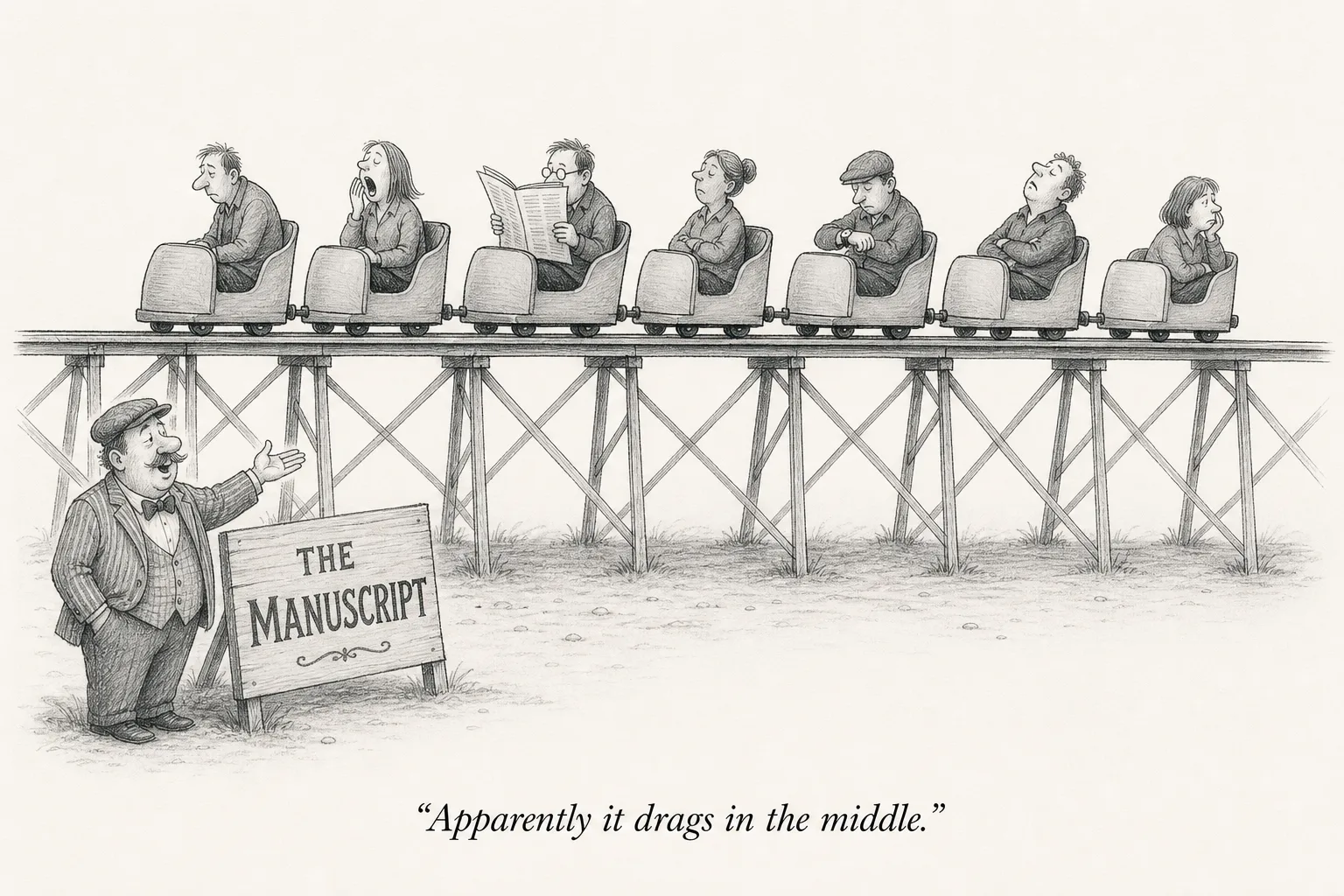
Sooner or later, every finished novel meets some version of this sentence: I loved the writing, but the pacing didn't quite work for me. It turns up in agent rejections, in a beta reader's notes, in the pause a friend leaves before they say anything at all. And it is almost always followed by the least useful clarification in publishing: it dragged a bit in the middle.
Ask where, and nobody can tell you. Ask what to cut, and you get a shrug. So you go back to the manuscript and do the only thing the note appears to license: you tighten. Out come the adverbs. Paragraphs get shorter. A chapter you were fond of loses its second half. Six weeks later somebody else reads it and says the pacing is off.
Pacing is not speed
The word is the problem. Pacing sounds like a measure of velocity — words per page, events per chapter, how fast the plot advances — and if that were what it meant, cutting really would be the cure.
It isn't. Pacing is the management of pressure and release. A reader keeps turning pages because something is at risk and they want to know how it comes out. They also need periodic relief from that pressure, because unbroken intensity stops registering as intensity at all. Pacing is the shape those two forces make across a book.
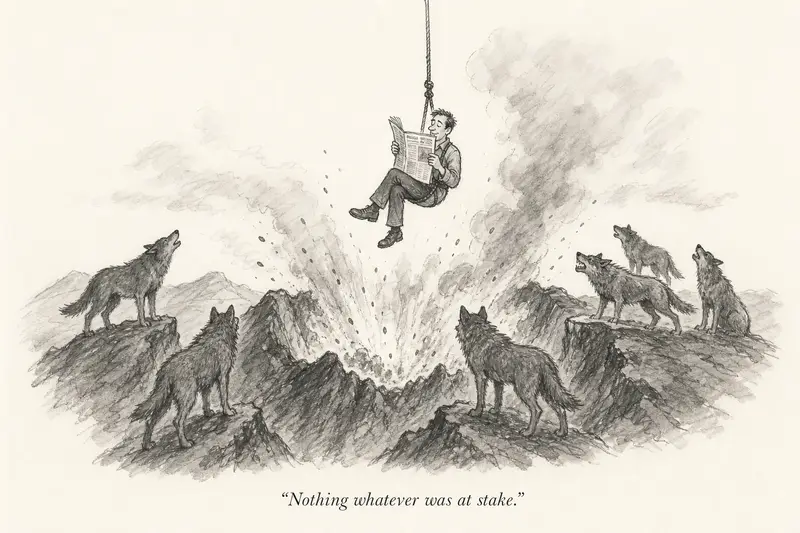
Which is why a car chase can be inert and a conversation across a kitchen table can be unbearable. Speed is a property of the prose. Pressure is a property of the situation. When a reader says a novel dragged, they are describing a long stretch in which nothing was genuinely at risk — and that stretch may well have been crowded with incident.
Notes on the craft
Occasional letters on what actually breaks novels — and how to fix them. Written for people revising a draft.
No fixed schedule. Unsubscribe in one click. Privacy Policy
Why you cannot feel it from inside your own draft
Here is what makes this genuinely hard, and it is the recurring problem of the whole series: you are the one reader in the world who cannot experience your own pacing.
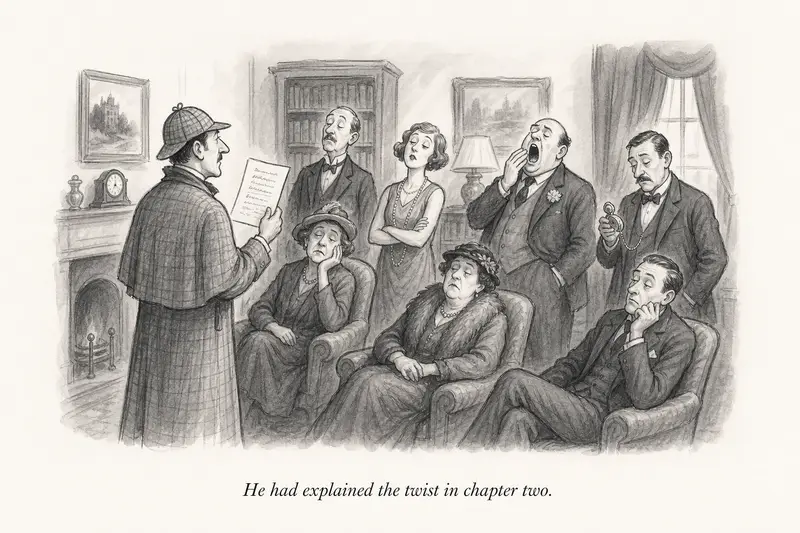
You know what is coming. When your protagonist spends three chapters interviewing witnesses, you read those chapters with the ending in your peripheral vision, and the pressure of that ending leaks backwards into scenes that do not contain any. You supply from memory precisely the thing the reader is supposed to be handed by the page. The gap is invisible to you, and only to you.
It is also why the note arrives as a feeling rather than a location. Your reader felt the flatness but cannot point to it either, because the sensation accumulates — by the time it registers, they are eleven scenes past the place where it started. That division of labour, between what can be measured and what only a writer can judge, is a subject in itself.
How to test it by hand
You do not need software for this. You need your chapter list, one sheet of paper, and a rule you are not allowed to break: no re-reading the scenes, no fixing anything.
For each chapter, write a single letter. R if the pressure on your protagonist is higher at the end of the chapter than it was at the start. H if it holds roughly where it was. F if it falls — a rescue, a reconciliation, a confession, a night's sleep. Write the letters in one line across the page, in order, and then read the line instead of the book.
What you are looking for is not a good score. It is a shape:
- A run of four or five Hs is your sagging middle, and it now has an address.
- Fs bunched together mean you are releasing pressure you never built.
- R F R F R F across a whole act is a book that resolves everything it raises within a chapter, which reads as busy and feels like standing still.
- An opening of four or five Hs means the novel has not started yet — it is a prologue in disguise, however good the prose is.
Two disciplines keep the test honest. Judge each chapter as it actually leaves the reader, not as you intended it to land. And where you genuinely cannot decide between R and H, write H. Optimism is the enemy of this exercise.
What it looks like when it goes wrong
The same handful of patterns account for most flat middles.
The research trip
A run of consecutive scenes in which the protagonist gathers information, travels or reflects. Summarised, the section sounds like progress; read, it feels like waiting. Note that information is not the culprit. The lunch with Meyer Wolfshiem in The Great Gatsby is almost pure exposition, and it is not inert for a second, because a live question is running underneath it and every fact Nick collects makes that question worse rather than better. Delivering information is fine. Delivering it while nothing is at stake is not.
The cold open that isn't
Opening chapters that are competent but static: the voice is assured, the world is established, and nothing is yet at risk, so the climb the reader expected never begins. This one is almost always fixed by addition rather than cutting — find the earliest moment where something is genuinely in danger and see whether a smaller version of it can be planted earlier still.
The sprint finish
The climax turns out to be the fastest scene in the book rather than the highest. You have known how it ends since the outline, so you write it at the speed of intention rather than the speed of experience, and the major turns land in summary. Fitzgerald does the opposite in the Plaza Hotel: the heat, the room, the hours, the whole thing given its space, so that the accident afterwards has something to fall from.
The sawtooth
Tension spikes and collapses scene to scene with no accumulating pattern. Each scene has been pitched for maximum drama in isolation, without reference to where the last one finished or what the next one needs. Every scene is locally strong; the sequence has no logic. The repair is continuity of pressure, not more intensity.
Where the book shows you this
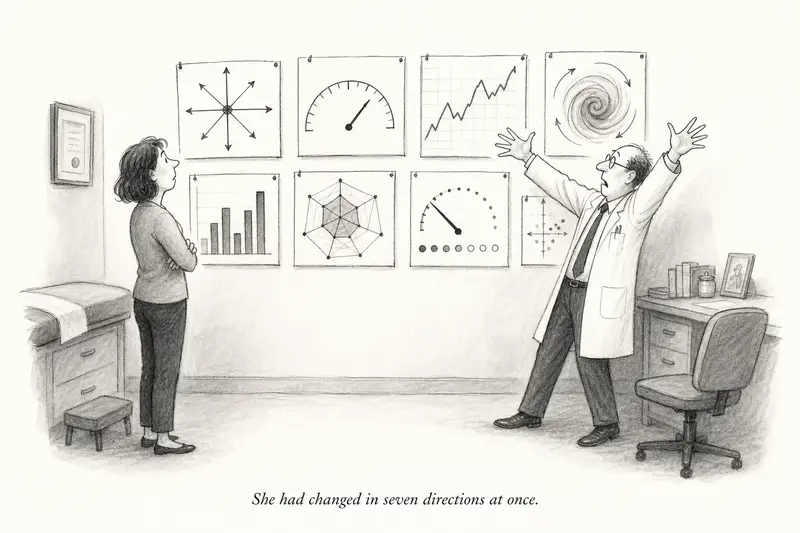
This is the shape Novel Maestro draws in the diagnostic called Momentum. It reads the whole manuscript, scores every scene by the same criteria, and plots the narrative energy of the book from first scene to last — then names the arc the draft actually makes, divides it into structural segments, and flags the specific pacing faults with the scenes attached, so a slack middle or a rushed ending arrives as a list of chapters rather than an adjective.
A bad result is easy to recognise once it is on a page: a long plateau through the middle third, or a final act whose line sinks as it approaches the climax. Either way you get what the beta reader could not give you, which is a location.
What no measurement will tell you is which of two chapters deserves to survive, or whether that plateau is a fault or the quiet your book has earned. Narrowing four hundred pages to five scenes is a measurement problem. Deciding what those five scenes are for is the writing.
One of these a week, give or take
If this was useful, the letters are more of it: one problem a novel runs into, what it looks like on the page, and what to do about it.
No fixed schedule. Unsubscribe in one click. Privacy Policy