What your genre actually promises the reader
Genre is not a shelf. It is a set of expectations the reader arrives holding — and breaking one by accident is not the same as breaking it on purpose.
The rejection that stings most is not the one that says the writing is weak. It is the one that says: beautifully done, but I am not sure how I would place this. Or, from a reader inside your genre and therefore harder to dismiss: the ending cheated.
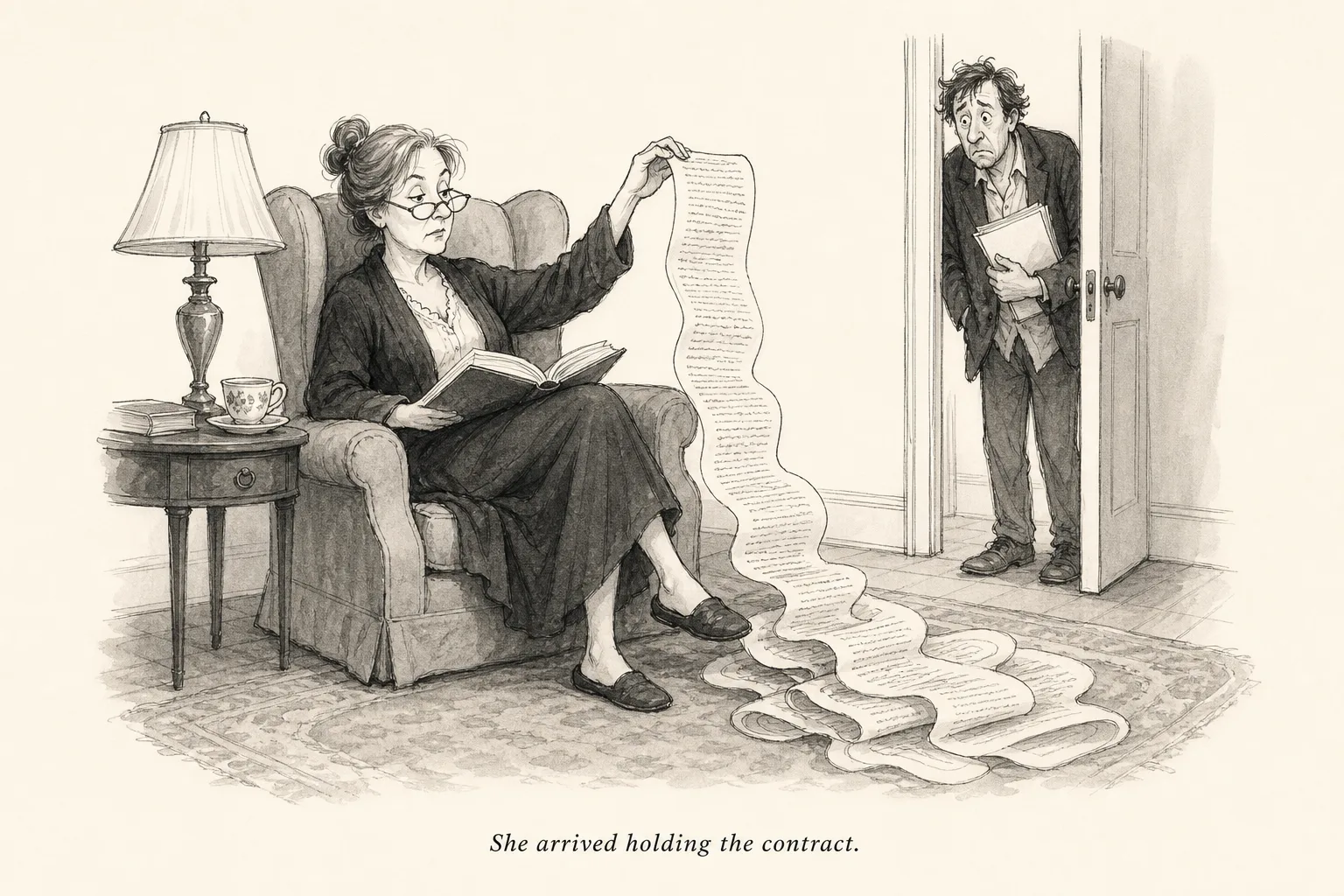
You did not cheat anybody. You wrote the ending the book seemed to want. But somewhere between the first page and the last, a contract you did not know you had signed was broken.
Genre is not a shelf
It is a set of expectations the reader arrives already holding.
Nobody comes to a novel empty. A reader who has read forty crime novels brings the accumulated experience of forty crime novels through the door with them, and that experience takes the form of a promise about what the book will do to them by the end. Genre is the name we give to that promise. It is not a category imposed by bookshops; it is a description of what a particular kind of reader is hoping to feel, and roughly by when.
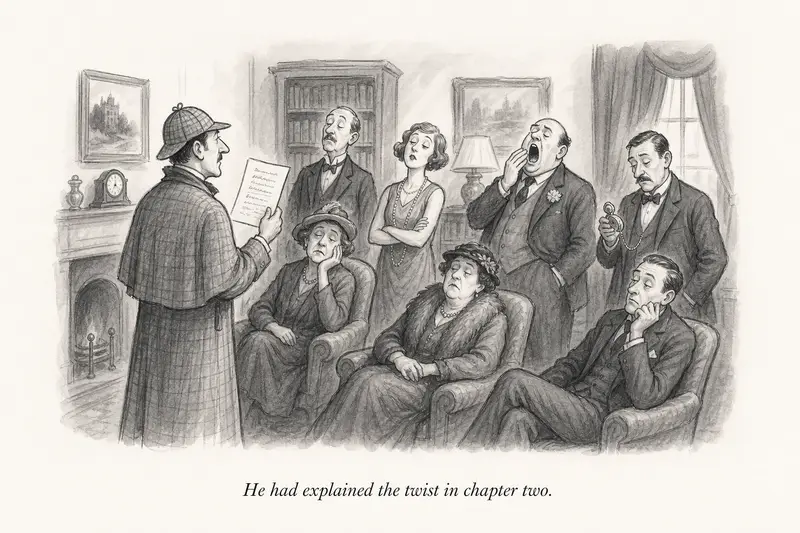
The promises differ sharply, which is why generic advice about "genre conventions" is so useless. Crime and mystery readers read competitively: fair play means every deduction the detective makes was available to the reader first, in plain sight, at the moment it mattered. A thriller runs on two engines, a threat with the power to act and a clock that makes waiting impossible. Romance carries the strictest contract in fiction — the central couple ends together, and the reader has to believe it was earned. Fantasy readers will accept any premise and almost no inconsistency, because the wonder is in the limits. Science fiction promises an idea followed through honestly, consequences and all. Horror promises dread and then damage that survives to the last page. Historical fiction promises a world you can stand inside, built from detail that changes decisions rather than decorating rooms. And literary fiction, which is often said to have no contract at all, carries the loosest genre contract and the strictest craft one: nobody demands a particular ending, but the book must keep the promise its opening pages made about voice, subject and the kind of question it is asking.
Those are eight families, and every genre sits inside one of them. If you want to see where yours falls, and the one-line promise attached to it, they are all set out here.
Notes on the craft
Occasional letters on what actually breaks novels — and how to fix them. Written for people revising a draft.
No fixed schedule. Unsubscribe in one click. Privacy Policy
Kept, bent, broken — and broken by accident
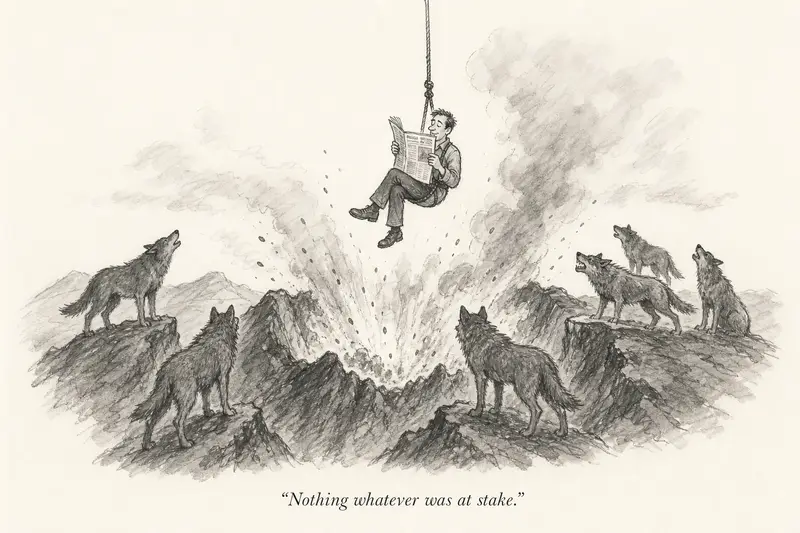
Conventions are not rules and this is not an argument for writing to formula. A convention can be kept, and the reader is satisfied. It can be bent, and the reader is delighted. It can be broken outright, and the reader can be thrilled by that too — the mystery with no solution, the romance that ends apart, the thriller whose threat turns out to be nothing.
What a reader will not forgive is a convention broken by accident, because the two are indistinguishable on the page unless you make the difference visible. A deliberate subversion is preceded by evidence that you knew exactly what you were withholding: the suspects gathered, the declaration half-formed, the clock still running. Break a promise without ever demonstrating that you understood it, and the reader does not experience a bold choice. They experience an omission.
Why you cannot see it from inside your own draft
Because you have read hundreds of books in your genre, and that fluency is exactly what hides the contract from you.
The conventions went in so long ago that they no longer feel like promises; they feel like the way stories go. So when your ending satisfies you, you cannot tell whether it satisfies because it delivers or because you know what you meant by it. You are supplying the missing charge yourself — the same difficulty as ever, and the reason a reading by someone who does not know your intentions is worth having.
The other blind spot is scale. A convention is not usually broken in a sentence; it is broken across four hundred pages, by a clock that stops being mentioned in chapter eleven or a threat that goes off the page for a hundred and fifty pages while the protagonist thinks. Nobody catches that in a chapter-level revision, including you.
How to test it by hand
One sentence, then one scene.
First, write down the single scene a reader of your genre would feel cheated to miss. Not a list — one. In a mystery it is the confrontation where the solution is stated and cannot be evaded. In a romance it is the moment where the wound is chosen against, in the open. In a thriller it is the protagonist and the threat in the same room with the clock at zero.
Now find it in your manuscript and ask three things. Is it dramatised as it happens, or is it summarised, reported by another character, or skipped over a chapter break? Is it as long and as intense as the anticipation the book has built for it? And does your protagonist decide anything in it? A promised scene that is present but thin is nearly as costly as one that is missing, and it is far more common.
Then the ending. Write the genre's ending contract in one sentence — what the reader is owed emotionally by the last page — and read your final chapter against it. Where the two diverge, you have a decision to make: signal the departure earlier so the reader recalibrates, or deliver what you promised. What you cannot do is leave it to chance.
What it looks like when it goes wrong
The genre tourist
The manuscript borrows the furniture — a body in chapter one, a countdown, a brooding detective — but the emotional payoff at the end belongs to a different genre, usually literary ambiguity. Everything up to the last act promises resolution; the last act offers atmosphere instead.
The bait and switch
A conventionally shaped opening gives way to a middle that quietly abandons the structure it promised. The pace slackens, the clock disappears, the procedural becomes a meditation — and nothing signals to the reader that the contract has changed, so they read the rest of the book waiting for a story that is no longer being told.
The rule-breaker without a licence
The convention is subverted, but nothing in the text demonstrates that you understood it well enough to earn the break. Write the convention properly first — deliver the clues, build the clock, earn the intimacy — so the trust is fully banked. Then break it, and be able to say in one sentence what the reader gets instead.
The vanishing confrontation
The obligatory scene is technically present but has been resolved in summary, or through a report from someone who was there, or after a time-skip. This is almost always a failure of nerve rather than of understanding: the scene the whole book has been promising is the hardest one to write, and summary is a comfortable place to hide.
The convention checklist
The opposite failure. Every essential beat and role is present and correctly sequenced, and the book is inert. Each obligatory scene has to earn its place twice — once because the genre asks for it, and once on its own terms, with a specific stake and something changing hands.
Where the book shows you this
In Novel Maestro this is the diagnostic called Genre Promises. It works out the conventions, obligatory scenes and obligatory character roles that belong to your genre — not genre in the abstract, but the specific one, with its family, its blend and its ending contract — and then goes looking for each of them in your manuscript.
Every convention comes back marked kept, bent or broken, with the evidence quoted from your own pages and the scenes attached, and with obligatory items distinguished from optional ones, because those are the ones a reader will actually punish. Underneath sits an overall reading of how much of the contract the draft delivers.
The part that matters most is what happens after a broken verdict. You can mark a deviation as intentional, and it is recorded as a subversion rather than reappearing as a fault every time the book is read again. Which is the right way round: the tool's job is to tell you the reader will notice, not to tell you what to do about it. Whether to keep a promise, bend it or break it in the open is a matter of nerve and intention. That part is the writing.
One of these a week, give or take
If this was useful, the letters are more of it: one problem a novel runs into, what it looks like on the page, and what to do about it.
No fixed schedule. Unsubscribe in one click. Privacy Policy