Tension is not conflict
Conflict is two forces pushing against each other. Tension is the reader's dread about what happens next — and a scene can carry either one without the other.
There is a reader's note that is harder to act on than any structural complaint, because it does not name a fault at all: I kept putting it down. Not that the prose was weak. Not that the plot was confusing. They simply felt no particular pull to pick the book back up, and they are apologetic about saying so.
The instinctive response is to add friction. Give somebody a row in chapter four. Have a character storm out. And it is entirely possible to fill a manuscript with opposition — people snapping at each other every fifteen pages — and get exactly the same note back six weeks later.
Two different things wearing one word
Conflict is opposition on the page: a want meeting an obstacle, two forces pushing against each other in a scene. Tension is not on the page at all. Tension is the reader's condition — their anticipation, their unease, their dread about what is coming next.
One lives in the scene. The other lives in the person holding the book. They are related, and writers use the words as though they were interchangeable, but neither one produces the other automatically.
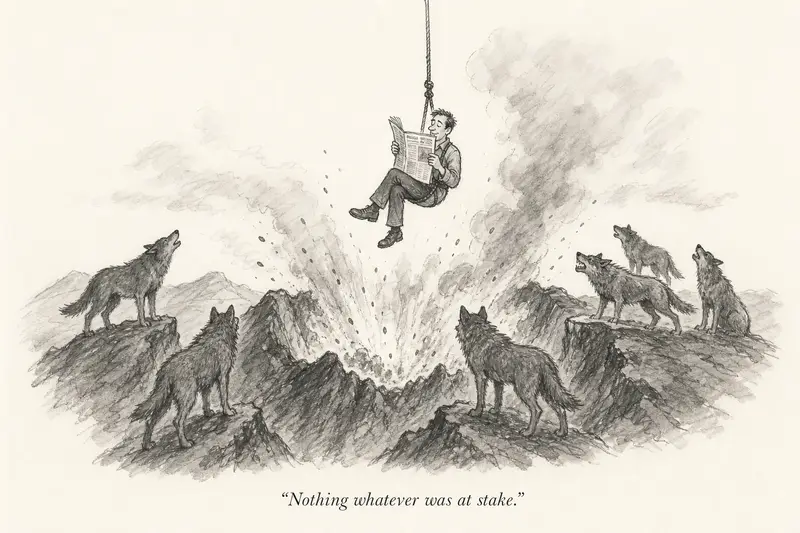
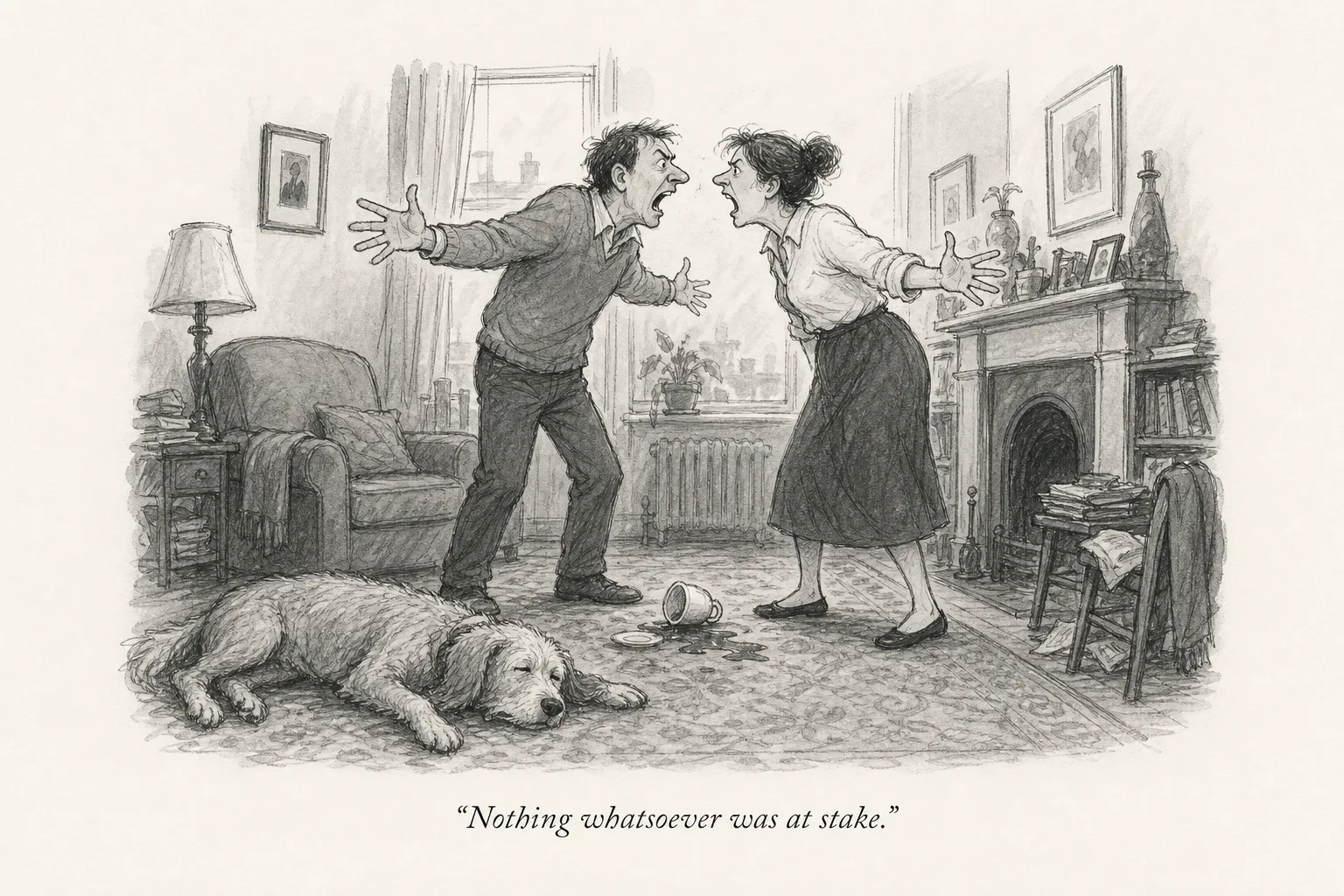
A shouting match between two characters whose quarrel settles nothing is conflict with no tension. A character alone in a room, waiting for a telephone to ring, is tension with no conflict whatsoever: nobody is opposing anybody, and the reader cannot look away.
This distinction is worth more than it sounds, because the two defects have opposite cures. A scene that is flat for want of anticipation gets worse when you add an argument — the row hands the reader something to watch instead of something to worry about. A scene of pure friction that leaves nothing hanging does not need more heat either; it needs a consequence the reader can be afraid of.
Notes on the craft
Occasional letters on what actually breaks novels — and how to fix them. Written for people revising a draft.
No fixed schedule. Unsubscribe in one click. Privacy Policy
Why you cannot feel your own tension
Because you know what happens.
When your protagonist opens the envelope in chapter nineteen, you have known what is inside it since the afternoon you invented the envelope. Tension is manufactured entirely out of not knowing, and not knowing is the one condition you cannot arrange for yourself. This is the recurring difficulty of every craft problem in this series, and we have written about it at length elsewhere: you supply from memory the very thing the page is supposed to hand over.
There is a second trap layered on top of it. Writers tend to remember scenes by how hard they were to write. The chapter that took three weeks feels charged, because for you it was; the chapter that arrived in an afternoon feels slight. Neither has anything to do with what a reader experiences, and a draft revised on that instinct usually gets tightened in precisely the wrong places.
How to test it by hand
Take three consecutive chapters and score every scene twice, in two separate passes.
First pass: conflict, out of five. How much opposition is actually present on the page? Who wants something, and what is in their way? Ignore how it feels; count what is there.
Second pass — and do it on another day, if you can — tension, out of five. How much would you worry about the outcome of this scene if you genuinely did not know how it ends?
Then read the two columns as pairs. Fives against ones are your diagnosis. High conflict with low tension means you have written argument without consequence. Low conflict with high tension is not a fault at all: it is often your best work, and the pass will stop you cutting it. The pattern to fear is the one that looks fine in isolation — a long run of threes and threes, every scene carrying a modest dose of bickering and a modest dose of suspense, so the book reads as one continuous texture with no scene standing out as either a held breath or a genuine clash.
There is a quicker version of the same test. For each scene, write down the question the reader is holding as they read it, phrased as a question: Will she tell him? Is the money in the case? Does he already know? The scenes where you cannot write the question are your flat ones, however much happens in them.
What it looks like when it goes wrong
The shouting match that changes nothing. Sharp, escalating dialogue that reads as dramatic on the page and leaves no residue behind it. Nothing the reader was worried about has been resolved or deepened, because nothing was ever really in the balance. These scenes are seductive to write; they feel like work being done.
The waiting room, interrupted. A scene built entirely on anticipation — a character waiting for news, a letter left unopened on the hall table — into which the writer drops a visitor, a fight or an unrelated complication, because the quiet made them nervous. The suspense was the scene. The interruption is the damage. The most unbearable stretch of The Great Gatsby is an afternoon in which a man waits in a house full of flowers for a woman who has not yet arrived, and nobody opposes him for a moment.
The stakes-free duel. Two characters clash repeatedly across the manuscript, the same argument recurring with variations, each instance reading as incident without accumulating any dread about how it will finally end. Repetition is not escalation. If the third confrontation costs no more than the first, the reader has quietly stopped expecting a resolution.
The uniform scene. The failure that hides from every kind of scrutiny except a graph. No individual scene is bad. It is the sameness that flattens the book, and sameness is invisible when you read a chapter at a time — which, in revision, is how you always read.
Where the book shows you this
Narrative Pulse is the tool that separates the two. It reads your manuscript scene by scene and plots six dimensions independently — tension, conflict, stakes, agency, revelation and emotional intensity — so that conflict and tension appear as two different lines rather than one impression.
What you are looking for is not a high average. It is divergence and monotony. Where the conflict line runs high and the tension line runs low, you have found argument without consequence. Where tension runs high with no conflict beneath it, you have probably found something worth protecting. And where all six lines run flat and level for a third of the book, you have the uniform scene at scale — the thing every reader feels and nobody can point to.
Momentum, its neighbour, then asks the related question about shape over time, which is where the pacing note usually turns out to have come from.
None of which decides anything for you. A quiet, tensionless scene can be exactly the rest a reader needs after a hard one, and only you know whether that is what you meant. But it is worth knowing which of the two you have written, because adding an argument to a scene that needed a held breath will cost you the one thing the scene had.
One of these a week, give or take
If this was useful, the letters are more of it: one problem a novel runs into, what it looks like on the page, and what to do about it.
No fixed schedule. Unsubscribe in one click. Privacy Policy