Every scene wins or loses ground
Beneath the plot of every scene sits a value that moves. Scenes that end where they began leave the reader with nothing to carry forward.
Of all the notes a competent manuscript can receive, the strangest is this one: it's beautifully written, but I don't think anything happens.
It is strange because things demonstrably do happen. People travel, argue, discover, grieve. The writer can list the events of the chapter in question, and the list is not short. And yet the reader, who is not lying, finished it with the sense of having stood still.
The thing beneath the events
Under the plot of every scene there is a value, and that value moves. Safety, trust, freedom, status, hope, love, self-respect: whatever the story has put at risk in that moment. A scene works when the value ends somewhere different from where it began — better or worse, for someone. That movement is the scene's charge.
Which means a scene is not a container for dialogue and description. It is a transaction. Something enters with a certain value attached and leaves with a different one. A scene that opens with a woman trusted and closes with her trusted exactly as much has not, in any sense a reader can feel, happened.
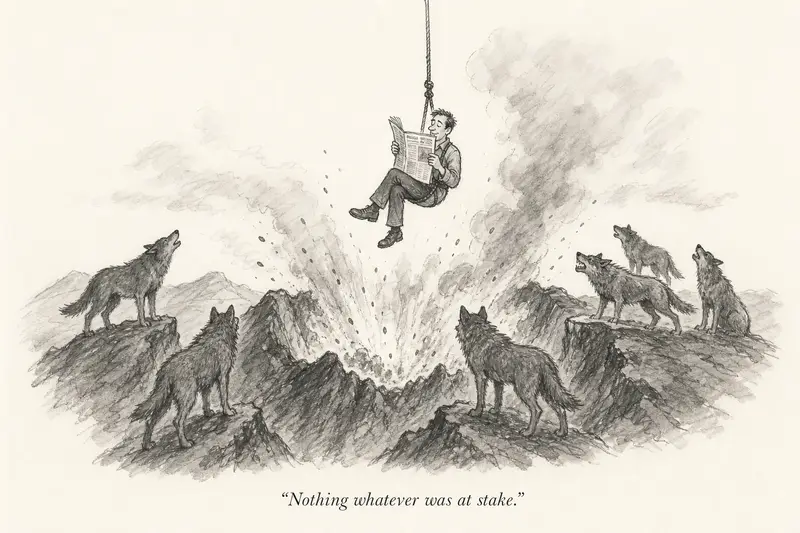
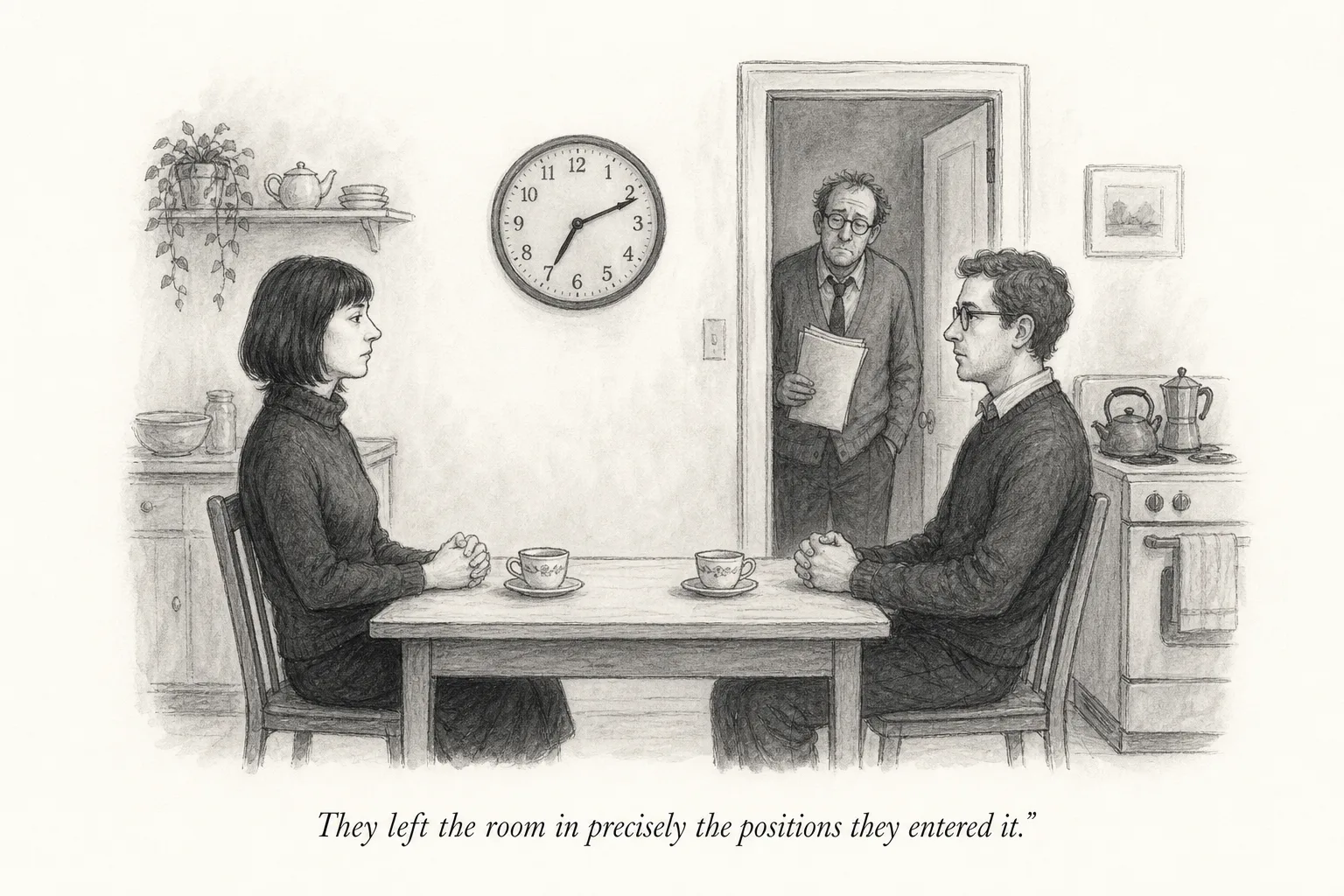
Charge is easy to counterfeit with motion, and this is where good prose becomes a liability. Two people can argue for four pages, a car can leave the road, a secret can be spoken aloud, and the value at stake can end the scene precisely where it started. Meanwhile two people drinking tea in silence can carry enormous charge if the balance of power between them has shifted by the final line. Charge is not a function of volume. It is a function of position.
Notes on the craft
Occasional letters on what actually breaks novels — and how to fix them. Written for people revising a draft.
No fixed schedule. Unsubscribe in one click. Privacy Policy
Why you cannot see it from inside your own draft
Because you know what the scene is for.
You know it is the scene where she begins to doubt him, so you read the doubt into it, and you cannot tell whether the page delivers the shift or whether you are supplying it from the plan. It is the same blindness that runs through every problem in this series, and it is at its worst here, because charge is invisible in a way that a missing scene or a contradictory date is not. Nothing is absent. Everything is present. It just has not moved.
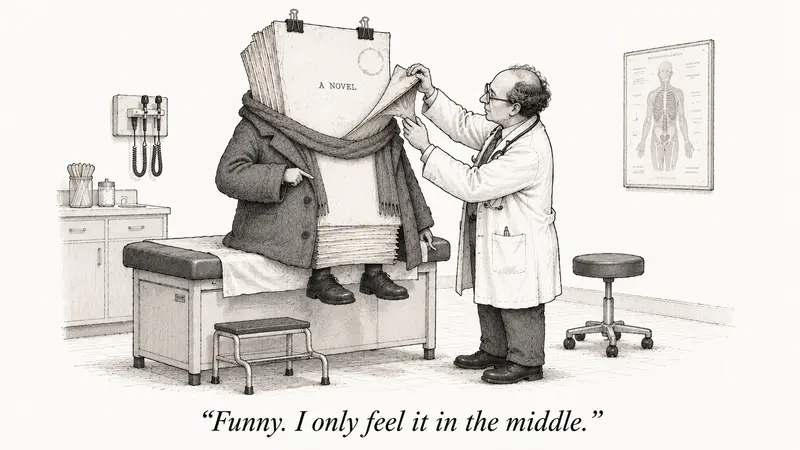
There is a related trap in reading a run of scenes. Flatness is a cumulative property. Any single scene that ends where it began is defensible — a breather, a texture piece, a chance to sit with a character. Six of them in a row are the sagging middle that every writer has been warned about and nobody can locate, because they are located in the joins rather than the scenes.
How to test it by hand
Take twenty consecutive scenes and give each one a single line.
Write the value at stake in one word — safety, trust, freedom, standing. Then mark where the scene starts on that value and where it ends: a plus if the character gains ground, a minus if they lose it, a zero if the position is unchanged. Resist the urge to explain; one word and two marks.
Then read the column of signs on its own, without the scenes. This is the part that does the work. Long runs of the same sign read as monotony even when every scene is eventful — nine straight losses is not gathering darkness, it is a reader who has stopped hoping. Runs of zeros are the flat stretch. And an alternation so regular it looks like knitting — plus, minus, plus, minus — usually means the story is resetting rather than escalating, which is the same finding in a more flattering disguise.
One refinement, and it is worth the extra pass: beside each sign, note whether the prose was warm or cold in that scene. You are looking for the rows where the two disagree.
What it looks like when it goes wrong
The static argument. Two characters clash with real heat and leave the scene in the same relative position they entered it: same suspicion, same allegiance, same balance of power. The scene has motion but no displacement, so the confrontation resets instead of resolving. Deciding, before you write the last page, who loses ground and what exactly it costs them is usually the whole repair.
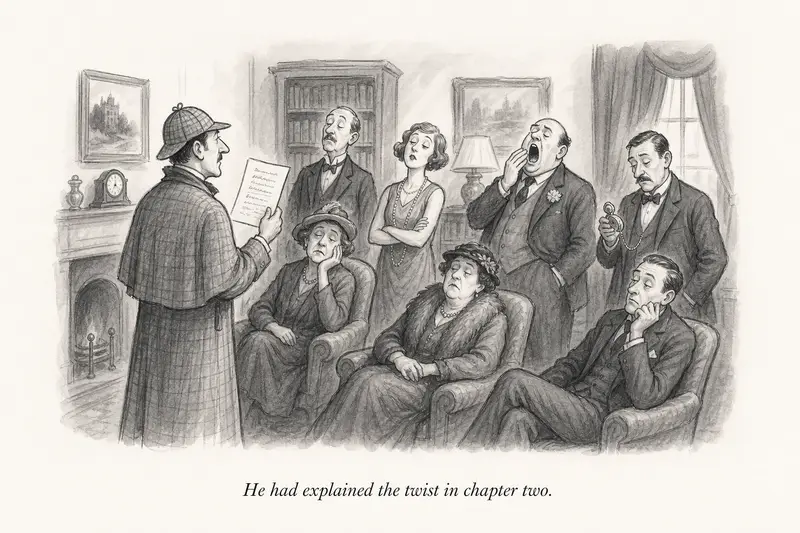
The information drop. A character learns something significant and the scene ends immediately, as though the revelation were self-evidently a payoff. It is not. The charge lives in the aftershock — a decision now taken differently, a plan abandoned, a warmth withdrawn. Stay in the room long enough to show one concrete effect.
The bystander charge. Something genuinely shifts — a rival is humiliated, a fortune is lost — but the point-of-view character is merely present for it. The scene has been charged for the plot's benefit rather than for the person whose eyes we are behind, which is a common consequence of building a scene to deliver information through a conversation somebody overhears.
The stranded sentiment. The turn and the tone pull in opposite directions. A betrayal written in warm, elegiac prose that lingers on the beauty of the afternoon rather than the damage; a hard-won reunion delivered in language that stays clenched and wary, so the release the plot promised never arrives. Sometimes this is deliberate, and comic prose over a bleak turn is a whole mode of literary irony. More often the writer was simply enjoying the sentences. The question is only ever whether the gap is authored, and a reader can tell the difference.
Where the book shows you this
The Value Arc is the tool built for this layer. It reads the three signals that sit beneath plot and pacing — how present your theme is, the emotional temperature of the prose itself, and the value charge of each scene — and lays the charge you actually wrote over the shape your genre leads a reader to expect.
Two findings come out of that. The first is the run: the stretches where the charge sits flat, or runs against the expected shape, which is what a reader is describing when they say a middle sags. The second is the disagreement between tone and turn — scenes where the prose is warm and the story is losing ground, listed as pairs so you can decide, scene by scene, whether you meant it.
You can read a real one before you own an account: the sample diagnostic is an unabridged Value Arc read of The Great Gatsby, a novel whose charge runs downhill with great deliberation.
Charge is also the reason the two nearest problems in this series are worth reading together: a scene with no charge is often a scene that changes nothing, and the value your scenes keep moving along is, in the end, the argument your book is making — enacted rather than stated.
One of these a week, give or take
If this was useful, the letters are more of it: one problem a novel runs into, what it looks like on the page, and what to do about it.
No fixed schedule. Unsubscribe in one click. Privacy Policy