Best AI Editors for Your Novel: 8 Tools Compared
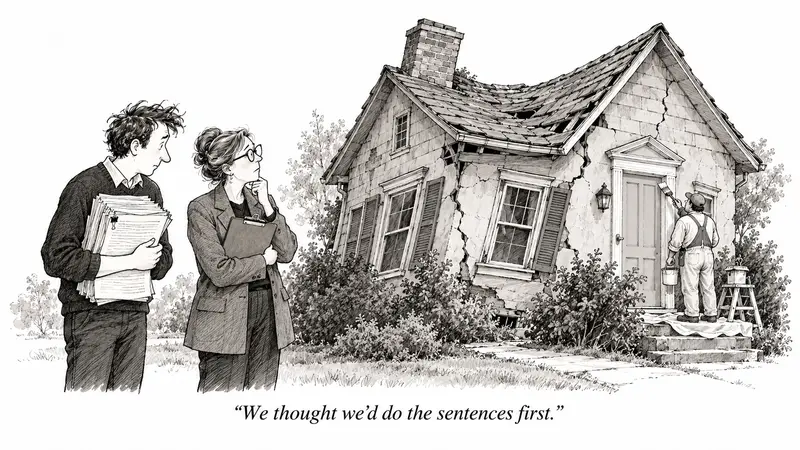
You can fix every comma in a novel and still have a novel that doesn't work.
Perhaps the middle loses its way. Perhaps your most interesting character disappears for fifty pages. Perhaps the ending makes perfect sense to you, but asks the reader to believe something the story hasn’t earned.
That is why choosing an AI editor starts with a more useful question than “Which one is best?”: What kind of help does your draft need?
Some tools help you polish sentences. Others examine plot, character and structure. Some will generate new prose. Others concentrate on helping you revise what you have already written.
This guide compares Novel Maestro, AutoCrit, Grammarly, Marlowe by Authors A.I., ProWritingAid, Inkshift, Fictionary and Sudowrite, with particular attention to what happens after the feedback arrives.
A note on perspective: this guide is published by Novel Maestro. We built our product for whole-manuscript developmental analysis and revision, so that is the perspective we bring. This is a comparison of publicly advertised features, checked on 26 October 2026, rather than a hands-on benchmark of all eight tools. The recommendations below describe suitability for different tasks, not independently measured rankings.
The best AI novel editors at a glance
| Tool | Best suited to writers looking for… | What to examine before choosing |
|---|---|---|
| Novel Maestro | Whole-draft feedback connected to discussion and revision | The sample report, free First Take and included reread allowance |
| AutoCrit | A broad writing platform with structural analysis | Which analysis and workflow features your membership includes |
| Grammarly | Grammar, clarity and sentence-level assistance | Whether your main problem is prose or story structure |
| Marlowe by Authors A.I. | Developmental reports and genre comparisons | Sample reports and the number of analyses you need |
| ProWritingAid | Prose editing alongside manuscript critique | Which reports and analysis allowances fit your workflow |
| Inkshift | A manuscript critique with optional revision plan and markup | The differences between feedback levels |
| Fictionary | Guided structural editing with craft education | Whether you want software alone or a wider learning community |
| Sudowrite | AI-assisted drafting, brainstorming and rewriting | Whether generating prose is something you want |
Publicly advertised features, checked on 26 October 2026. On a narrow screen this table scrolls sideways.
These categories overlap. Several of these tools analyse whole manuscripts, offer structural feedback or help with successive drafts. The useful comparison is how their features fit the work you actually want to do.
First, decide what you mean by “editing”
Developmental editing: does the story work?
Developmental editing examines the novel’s foundations: plot, character, stakes, structure, pacing, viewpoint and theme. It asks whether the scenes add up to a satisfying book.
If your concern is “I’ve written 80,000 words, but I don’t know whether the middle earns its place”, this is where to start.
Notes on the craft
Occasional letters on what actually breaks novels — and how to fix them. Written for people revising a draft.
No fixed schedule. Unsubscribe in one click. Privacy Policy
Line editing: does the writing work?
Line editing looks at how the story is told, sentence by sentence and paragraph by paragraph. It deals with rhythm, precision, emphasis, repetition and voice.
A scene might belong in the novel but still need sharper dialogue or less cumbersome description.
Copyediting and proofreading: is the text correct and consistent?
Copyediting addresses grammar, punctuation, usage and consistency. Proofreading is the final check for remaining errors, typically after the text has been edited and prepared for publication.
There is overlap between these activities, and software often bundles them together. But polishing a chapter you later decide to cut is an expensive way to spend an afternoon. For a rough draft, it usually makes sense to settle the larger story questions first.
1. Novel Maestro: for turning a whole-book reading into a revision process
Novel Maestro starts with the draft you have, including an unfinished one. It analyses the manuscript as a whole and connects its findings to passages you can inspect.
Four things are free, and worth exploring before you decide anything:
- Maestro’s First Take: a response based on the whole draft — its identity, its strengths and the areas needing attention — ending in one priority and a practical first move. It gives you somewhere to begin before committing to the full edit.
- Ask Maestro: three questions about your own manuscript. Question an observation, explore a character’s motivation, or think through the consequences of removing a scene.
- The sample novel: a complete book on your shelf with everything unlocked — the Developmental Report, every diagnostic, the readers’ verdicts and the exports. It is there so you can see exactly what a paid reading produces, in full, on a novel you already know.
- The craft lessons: sixty-one lessons explaining storytelling principles through examples and exercises. They help you understand the reasoning behind an edit, and they are free on every plan.
The paid offering adds a full Developmental Report on your own book, fourteen visual diagnostics, simulated reader responses and the tools for working through the edit. The free First Take and the full Developmental Report are different levels of feedback.
The reason to choose Novel Maestro is the connection between reading and doing. You can discuss feedback through Ask Maestro, turn a finding into a task and follow it back to the relevant passage. After revising, you can request another whole-book reading; included readings and additional charges depend on the current plan.
Imagine that a reader loses faith in your protagonist’s final decision. Your next job is to work out where that decision should have begun to feel possible. You need to inspect earlier scenes, consider alternatives and decide which change serves your book. A useful revision workspace should help you follow that question through.
Choose Novel Maestro if: you want developmental feedback you can question, organise and act on while keeping the creative decisions in your hands.
Consider another kind of tool if: your immediate priority is automatic grammar correction or generating passages of fiction.
You can inspect Novel Maestro’s Developmental Report on The Great Gatsby before uploading anything. Read a few observations about a book you know and judge whether the reasoning persuades you. A sample shows the form of the feedback; your own draft is the better test of usefulness.
Get your free whole-manuscript review →
Sources: features, plans and reading allowances.
2. AutoCrit: for a broad writing and editing platform
AutoCrit brings planning, writing, analysis and other author tools into one platform. Its current offering goes well beyond checking repeated words or comparing prose patterns.
Story Analyzer+ covers areas including character arcs, conflict, foreshadowing, viewpoint, world-building and continuity. It also maps manuscripts against different structural beat sheets, including genre-specific approaches. AutoCrit advertises both whole-manuscript and chapter-level analysis.
Choose AutoCrit if: you want a wide set of author tools and like examining your story against explicit structural frameworks.
The decision to make: do you want breadth across the writing process, or are you primarily shopping for a particular developmental revision workflow? Compare the actual interfaces and examples. “All-in-one” tells you how much a product includes, but not whether you will enjoy using it.
Sources: AutoCrit, Story Analyzer+, pricing.
3. Grammarly: for grammar, clarity and everyday prose assistance
Grammarly focuses on writing assistance across contexts. Its advertised features include grammar and punctuation checks, clarity improvements, tone suggestions and paragraph rewrites.
For a novelist, that makes it an option for cleaning up sentences, as well as the emails, synopses and other writing surrounding a book.
Choose Grammarly if: your immediate need is help with correctness and clarity rather than a dedicated developmental assessment of your novel.
The decision to make: are the changes improving the voice you intended? Fiction can use fragments, repetition, awkwardness and ambiguity deliberately. A suggestion that improves a business email may flatten a narrator. Assess each change in context rather than accepting every correction.
Grammarly can form part of a novelist’s toolkit without being the tool you ask to diagnose an unconvincing climax.
Sources: Grammarly features, product overview.
4. Marlowe by Authors A.I.: for developmental reports and genre comparisons
Marlowe Pro provides manuscript reports covering plot, pacing, character development, conflict, theme, dialogue, voice and other story elements. It also offers revision recommendations and comparison with books in your genre.
Authors A.I. positions Marlowe as analytical rather than a tool that writes your novel. Repeat reports are available through its subscription plans, and a separate Market Fit product addresses positioning and marketing.
Choose Marlowe if: you want a developmental report to take into your revision process and value its emphasis on genre comparison.
The decision to make: what will you do with the report once you have read it? Compare the sample outputs, how findings are presented and how you would organise the resulting work. If you expect several revision rounds, include the report allowance in your comparison.
Sources: Marlowe Pro, Authors A.I. products.
5. ProWritingAid: for prose editing and whole-manuscript critique
ProWritingAid combines sentence-level editing with a broader set of storytelling tools. Its current range includes writing reports, Chapter Critique, Manuscript Analysis, character and plot analysis, and a virtual beta reader.
Its Manuscript Analysis explicitly offers whole-book feedback, covering issues such as plot weaknesses, character consistency, pacing, themes and timelines. It advertises support for manuscripts of up to 300,000 words and access through integrations including Word, Google Docs and Scrivener.
Choose ProWritingAid if: you want prose-level tools alongside story analysis, especially if working in your existing writing application matters to you.
The decision to make: which parts of that toolkit will you actually use, and what does your chosen plan include? Treat the depth of the feedback and the cost of repeated analyses as separate questions from the availability of grammar checking.
Sources: ProWritingAid, Manuscript Analysis.
6. Inkshift: for a critique with optional revision planning and markup
Inkshift offers feedback on plot, pacing, character, setting, prose and marketability. Its services progress from a manuscript critique to a chapter-by-chapter revision plan and then line-level developmental markup.
Its free starter critique covers the first 10,000 words. The advertised markup package includes a follow-up review of the next draft, so it would be misleading to describe every Inkshift option as a single report with no revision follow-through.
Choose Inkshift if: you prefer to purchase a defined feedback package and want the option of increasingly detailed notes.
The decision to make: do you want a critique, a plan or comments throughout the manuscript? Those are different deliverables. Match the package to how you prefer to revise, and compare the sample critique with the questions you have about your own book.
Source: Inkshift features and packages.
7. Fictionary: for structural editing and learning story craft
Fictionary combines story software with an emphasis on education and community. Its StoryTeller software supports outlining, writing and editing, with story-arc visualisation and scene-specific feedback from its AI writing instructor, Edwina.
Its wider membership also includes live classes and community support; the site separately points writers towards software-only access.
Choose Fictionary if: you want a structured way to examine scenes and develop your understanding of story craft, potentially alongside other writers and instructors.
The decision to make: are you looking mainly for an assessment of this manuscript, or a framework for learning how to edit your own fiction over time? Those goals can overlap, but the balance matters when choosing a product and membership.
Source: Fictionary.
8. Sudowrite: for writers who also want help generating prose
Sudowrite sits partly in a different category. Alongside feedback, it offers tools for brainstorming, developing a story, expanding scenes and rewriting text. Its Story Bible supports a process from ideas and outlines into drafted chapters.
Choose Sudowrite if: you actively want AI assistance with creating or rewriting prose as well as responding to it.
The decision to make: where do you want AI involved? Some writers welcome generated alternatives. Others want to write every sentence themselves and use software for criticism and diagnosis. That preference should shape your shortlist before you compare individual features.
Source: Sudowrite.
How to choose an AI editor for your novel
A feature list is a starting point. The more revealing test is what a tool helps you see in your own pages.
Ask whether the feedback is specific enough to check
“Develop your protagonist” could be said about almost any rough draft. Useful feedback identifies a decision, scene or pattern and explains why it matters. You should be able to return to the text and decide whether you agree.
Look for priorities, not just volume
Twenty pages of observations can leave you as stuck as a blank page. Look for a clear distinction between the changes that could transform the book and the details that can wait.
Check what “whole manuscript” means in the offer
Does the tool assess the entire draft or an opening sample? Does the free version read the whole book but show a shorter assessment? What are the upload limits? These distinctions matter more than a prominent “free” button.
Work out the cost of revision, not just the first report
Your first analysis may create the need for a second. Check included readings, subscriptions, credits, expiry dates and additional charges. A one-off report and a revision workspace are different purchases.
Keep your editorial judgement
An AI editor can misread intention, miss context or suggest a conventional solution to an unconventional book. A chart is a way to investigate a story, not a ruling on its worth. Use feedback to make better decisions; disagreement can be part of that process.
Frequently asked questions
What is the best AI editor for a novel?
The best fit depends on the job. For developmental revision, compare manuscript-focused tools and their sample feedback. For sentence polish, examine grammar and style features. For generated prose, look at tools explicitly built to draft and rewrite. Novel Maestro is designed for writers who want to connect a whole-book assessment with the work of revision.
Is Grammarly enough to edit a novel?
It may help with sentence-level work, but a grammar check cannot establish that a novel’s character decisions, structure and ending are convincing. Plan a separate developmental revision, whether you do it yourself, with specialist software or with a human editor.
What are the alternatives to AutoCrit and ProWritingAid?
For manuscript-focused feedback, the options in this guide include Novel Maestro, Marlowe, Inkshift and Fictionary. Sudowrite is also relevant if you want generative writing assistance. Compare them against the same task rather than assuming that similar marketing labels describe identical products.
Can an AI editor replace a human developmental editor?
You should not assume equivalent judgement. AI feedback can give you questions and revision ideas to work through; a skilled human editor brings an individual reading, conversation and editorial relationship. Software can also help you prepare a stronger draft before commissioning an edit. For what one costs, see what a developmental edit actually costs.
Can I try AI novel editing for free?
Yes, but compare what the trial includes. Novel Maestro’s free First Take is based on the whole uploaded draft; the full Developmental Report and additional revision features belong to its paid offering. You can also inspect the public sample report before creating an account.
Start with the book you have
You do not need a perfect draft before seeking useful feedback. You need a way to see the draft clearly enough to make the next decision.
If that is where you are, start by looking at Novel Maestro’s sample Developmental Report. Then bring your own manuscript: the promising one, the untidy one, the one you have been meaning to return to.
One of these a week, give or take
If this was useful, the letters are more of it: one problem a novel runs into, what it looks like on the page, and what to do about it.
No fixed schedule. Unsubscribe in one click. Privacy Policy