The question your novel is asking
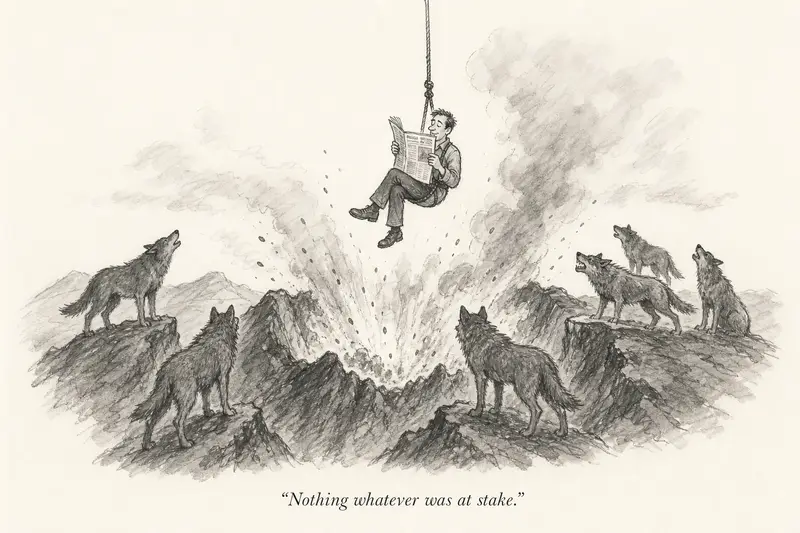
Every novel that holds a reader is running a single dramatic question underneath it. A theme cannot do that job, because there is nothing in a theme to fail at.
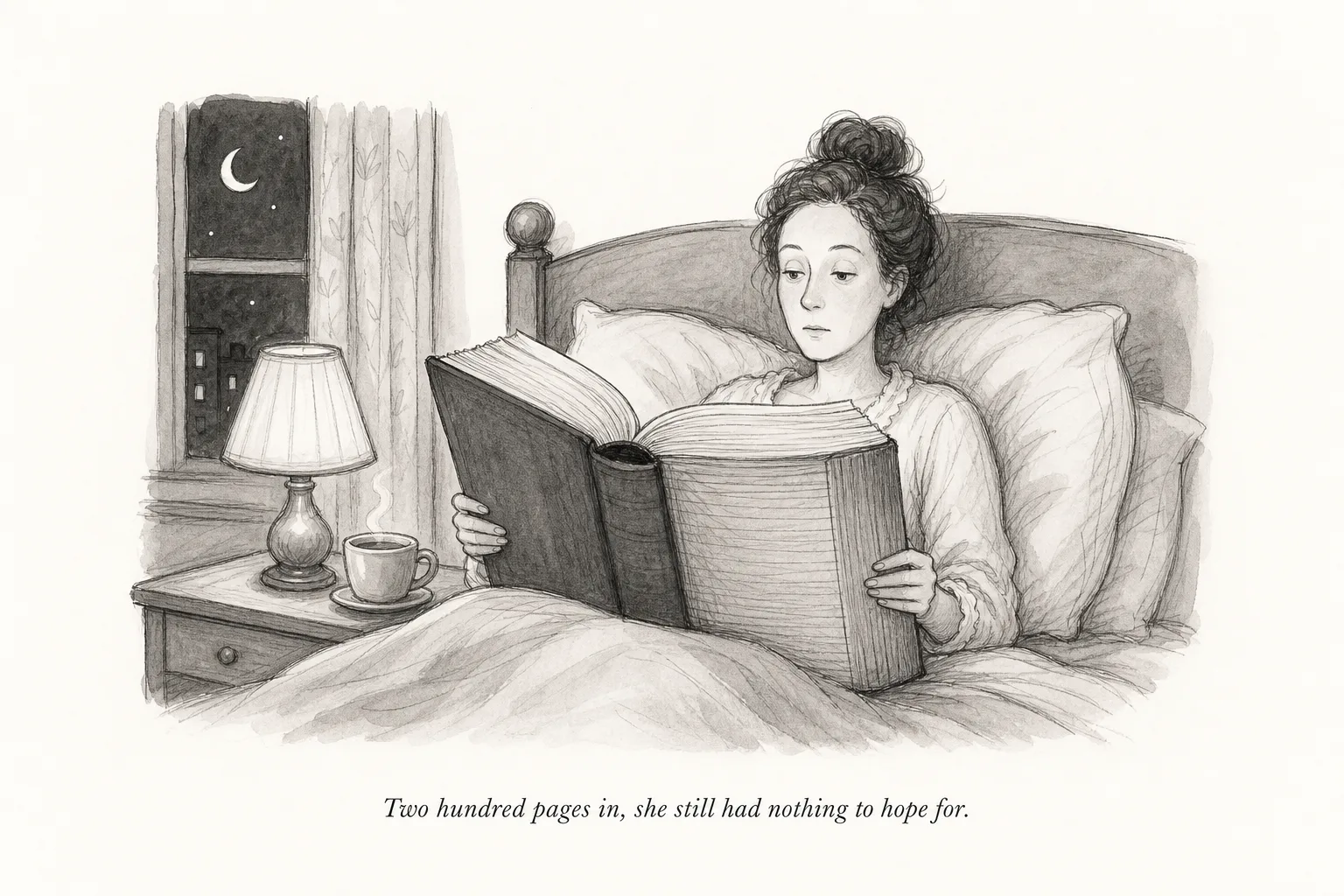
Some notes are complaints. This one is closer to an apology: I enjoyed it — I'm just not sure what I was hoping for.
It is a devastating sentence when you look at it directly. The reader turned four hundred pages without a stake in the outcome. Nothing was wrong with any chapter. They simply had nothing to want.
The engine, not the meaning
Every novel that holds a reader is running a question underneath it: a single dramatic uncertainty the whole book is testing. Can Gatsby win Daisy back? That is a question that generates scenes. The American Dream is hollow is a theme it explores along the way, and a theme cannot generate a scene, because there is nothing in it to fail at.
The distinction matters more than it sounds. A central question needs a specific want, a named person, and opposition with its own logic — something that will actively prevent the answer being yes. It has to be answerable, and for the length of the book the answer has to be genuinely in doubt. Theme is what the answer means. The question is what makes anyone stay to hear it. We have written separately about why theme is not a message, and this is the other half of that argument: the question is the engine, the theme is the freight.
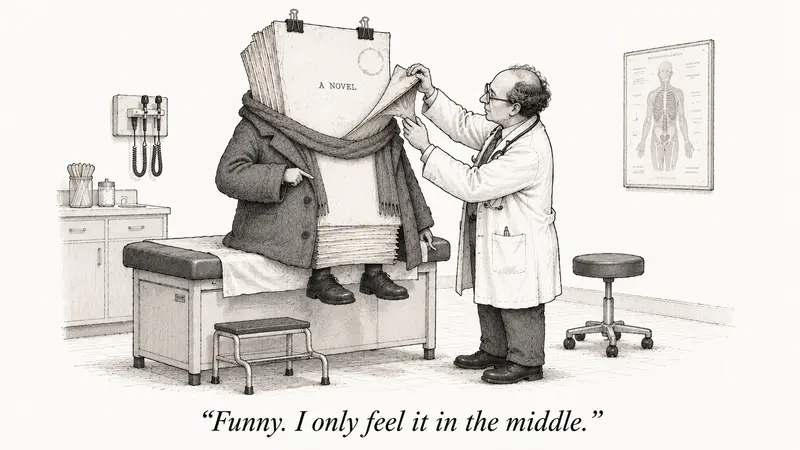
It also has to be one question. A novel asking two is not richer; it is a book that changes its mind halfway, and readers experience that as a story that lost its way at the midpoint even when every individual chapter is strong.
Notes on the craft
Occasional letters on what actually breaks novels — and how to fix them. Written for people revising a draft.
No fixed schedule. Unsubscribe in one click. Privacy Policy
Why you cannot hear the question you are actually asking
Because you know what you meant to ask, and you have known it since before there was a manuscript.
So you read every scene as an instance of that question, whether or not the scene puts any pressure on it. A chapter that would strike a stranger as a pleasant digression reads, to you, as another turn of the screw — because you can see the screw. This is the recurring difficulty of the whole series in its purest form: the question lives in your head, and you cannot tell how much of it made it onto the page.
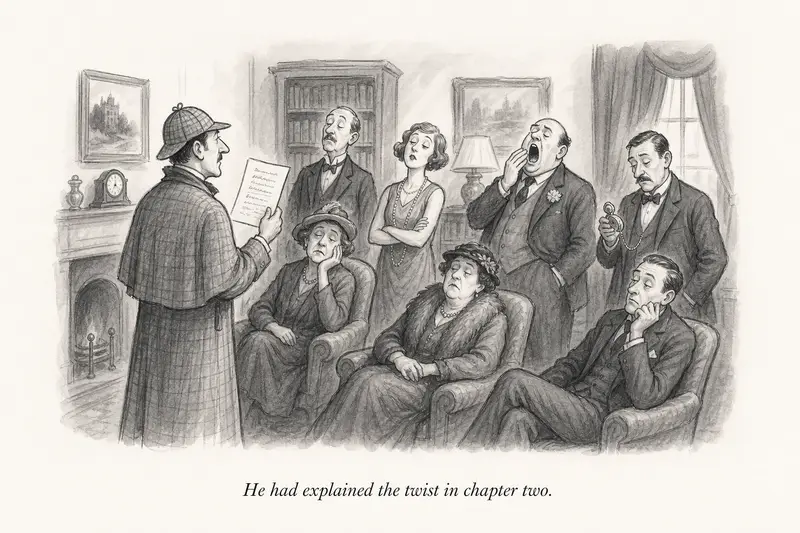
There is a second effect, and it is the one that produces the flat middle. Somewhere in the writing you settled the answer for yourself. You knew, by chapter eleven, that she was never going to leave. After that you were no longer writing towards an uncertainty; you were executing an outcome, and the prose quietly stopped arguing.
How to test it by hand
Write your novel's question in one sentence, beginning Can… or What happens when… Do it from memory, without opening the manuscript, and do not allow yourself a subordinate clause. If it takes two sentences, you have two questions, and knowing that is worth the whole exercise.
Then take your chapter list and give each chapter a single mark: does the answer look more like yes at the end of it, more like no, or exactly as it did before? Nothing else — three symbols down a page.
Two things fall out of that column. The runs of unchanged marks are the stretches where the book is idling. And the point after which the marks stop mattering to you — where you can no longer remember feeling any doubt — is where a reader stopped worrying too. That is your answer to the question of where the middle sags, and it is usually a chapter or two earlier than you would like.
One more test, if you have a reader available: ask them, at the halfway point, what they think is going to happen. If they are right, and confident, you have found the same fault from the outside.
What it looks like when it goes wrong
The essay in disguise. Scenes illustrate an idea or a mood — grief, isolation, corruption — rather than pursuing a testable outcome. The chapters are tonally consistent and structurally interchangeable, which is the tell: they could be reordered without damage. A theme has been asked to do a question's job.
The unopposed want. The goal is clear and nothing structurally prevents it. Obstacles arrive by coincidence and dissolve on contact. Opposition needs its own logic and its own stake in preventing the outcome, or the reader is watching a formality.
The premise that changes its mind. The opening chapters set up one question; by the midpoint the book is quietly answering a different one, and neither gets an earned resolution. This is almost never visible to the writer, because both questions are yours and both feel like the book.
The early verdict. By the middle third the reader can confidently infer the answer, and the remaining chapters proceed correctly and pointlessly. The repair is to find the page where doubt disappeared and put something genuinely at risk from there onwards — which is a structural change, not a matter of adding incident.
Where the book shows you this
Two places, and the first is unusual, because what it hands you is a mirror rather than a measurement.
Maestro's First Take includes a step called the Looking Glass, and one of its pages is Your Central Question: the question your manuscript appears to be asking, stated back to you in plain words, from the evidence of the pages alone. There is no better test of the gap between intention and execution. If it reads your book's question correctly, you have proof the page is carrying it. If it doesn't, that mismatch is the finding — and you can correct it on the spot, which puts your version of the question on the record for everything the app does afterwards.
Narrative Pulse then answers the second half: whether the pressure of that question stays on. It plots tension and stakes scene by scene, and the early verdict has a very recognisable signature — both lines going quietly level somewhere in the middle third and staying there while the plot carries on happening.
What the tools cannot do is choose your question, and they should not try. Plenty of fine novels run on a quiet question that would look thin written down. But a book has to be running one, and the reader who says they weren't sure what they were hoping for has told you, as politely as it can be put, that yours never made it out of your head. The nearest companion problem is the one underneath your protagonist: a central question is only as strong as the want and the need it is pulling against.
One of these a week, give or take
If this was useful, the letters are more of it: one problem a novel runs into, what it looks like on the page, and what to do about it.
No fixed schedule. Unsubscribe in one click. Privacy Policy